
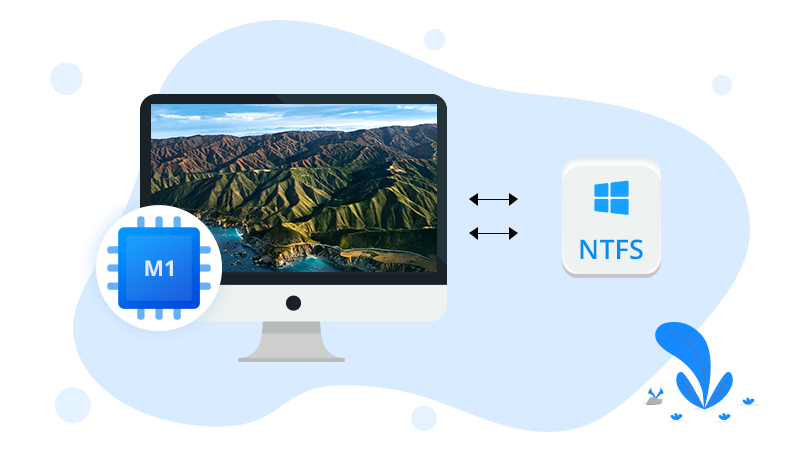
Have you ever opened your Mac only to find that the data you’re trying to access is showing up as “read-only”? If you’re a Mac user, you’ve probably encountered this frustrating issue. Mac computers use the APFS file system, while Windows uses NTFS, which is a big reason for the “read-only” restrictions. When a file or drive from a Windows system (formatted with NTFS) is accessed on a Mac, it often limits you to just reading the data, leaving you unable to edit or modify it.
But don’t worry—there are several ways to fix this issue and regain full access to your files. In this article, we’ll guide you through the causes of this issue and share practical solutions, including the best tool to use for seamless data access between Windows and Mac systems.
Why is My Drive Showing “Read-Only”?
Before jumping into the fixes, let’s first understand why your Mac is showing a drive or file as “read-only.” Here are a few common causes:
1. Formatting Errors:
Sometimes, when you’re formatting a drive or file, you might mistakenly set it to “read-only.” This is especially true when switching between different operating systems like macOS and Windows.
2. NTFS File System:
If the drive is formatted using the NTFS file system, which is the standard for Windows, macOS will often only allow read-only access. To fix this, you’ll need specific software that can enable write access to NTFS-formatted drives on Mac.
For further reading on file system compatibility, refer to Stanford Encyclopedia of Philosophy for a detailed exploration of how file systems like NTFS and APFS interact in multi-platform environments.
3. Access Permissions:
If a file or folder has restricted access permissions, it might be marked as “read-only” for users who aren’t authorized to make changes. This can happen when files are shared within a network or between users with different permission settings.
How to Fix “Read-Only” Drives on Mac?
Now that we know the main causes, let’s dive into the solutions. Here are five different methods to fix the “read-only” error on your Mac:
Method 1: Changing Permissions Manually
A common reason for the “read-only” issue is file permission settings. Files and folders can be locked with specific permissions that limit who can access or modify them. To change the permission, follow these steps:
- Connect the Drive to your Mac.
- Click on the drive and select “Get Info.”
- In the Sharing & Permissions section, click the padlock icon and enter your administrator password.
- Change the permission to Read & Write for your user account.
This method should allow you to edit the files if the issue is related to access restrictions.
Method 2: Ignoring Access Permissions via Finder
If you know the issue is due to restricted access permissions, you can quickly bypass these restrictions using Finder. Here’s how:
- Connect the drive to your Mac.
- Right-click on the drive and select Get Info.
- Scroll down to the Sharing & Permissions section.
- Check the box labeled Ignore ownership on this volume.
This method can be helpful when you’re sure the only issue is file permissions and nothing else.
Method 3: Fix Using Terminal
For those comfortable with Command-Line Interface (CLI), using the Terminal app can help you resolve the issue. It’s a more advanced solution but can be very effective.
- Open Terminal via Applications > Utilities.
- Type the following command:
sudo nano /etc/fstab. - Enter your administrator password and press Enter.
- Save the file and eject the drive.
This method will modify system settings and could fix issues related to the drive’s file system.
Method 4: Repair Using Disk Utility
macOS comes with a built-in Disk Utility tool that can fix many disk-related issues, including the “read-only” problem.
- Open Disk Utility from Applications > Utilities.
- Select the problematic drive from the list.
- Click on First Aid at the top of the screen and then hit Run.
Disk Utility will check for issues and attempt to repair the drive.
Method 5: Use iBoysoft NTFS for Mac Software
If none of the above methods work, or if you want the simplest solution, NTFS for Mac software is the best tool to resolve the read-only error for NTFS-formatted drives. Software like iBoysoft NTFS for Mac is a game-changer for users who frequently deal with NTFS-formatted drives on Mac.
iBoysoft NTFS for Mac allows you to read and write NTFS-formatted drives seamlessly, with no complicated steps. It’s a top choice for users looking for a safe and secure solution to manage NTFS drives on Mac. The software ensures you can access, edit, and modify files without the hassle of dealing with permissions or file system compatibility.
By installing iBoysoft NTFS for Mac, the NTFS drive will automatically be mounted in read-write mode, giving you full access to your data with just a click. For more details, check out iBoysoft NTFS for Mac.
Expert Insights on NTFS for Mac Compatibility
According to Harvard Business Review, as businesses increasingly adopt cross-platform workflows, tools like iBoysoft NTFS for Mac are becoming essential for seamless integration between Windows and macOS systems. These tools not only save time but also ensure data integrity by allowing full access to shared files, eliminating the “read-only” issue.
Additionally, Stanford’s Encyclopedia of Philosophy notes that as businesses transition to more complex technological ecosystems, ensuring smooth interoperability between operating systems is crucial for improving productivity and collaboration. Solutions like NTFS for Mac software are perfect for professionals who need fast, reliable access to shared data.
Final Thoughts
Dealing with “read-only” errors on your Mac can be frustrating, but with the right tools and methods, it’s definitely fixable. Whether you’re adjusting file permissions, bypassing access settings, or using tools like iBoysoft NTFS for Mac for full read-write access, there’s a solution for every scenario.
If you’re tired of dealing with the hassle of cross-platform compatibility, consider opting for iBoysoft NTFS for Mac to avoid the read-only issue altogether. This software makes it easier to manage your NTFS drives, allowing you to work seamlessly across Windows and Mac environments without any restrictions.
Ready to solve your read-only problem for good? Start using NTFS for Mac software today and enjoy effortless file access between your Windows and Mac devices!