Digital marketing is much broader than content marketing. It includes SEO, paid advertising, social media, email marketing, analytics, websites, and conversion optimization. However, content supports many of these channels because businesses need useful information to communicate with their audiences.
A search result needs a useful page behind it. A social media post needs an idea worth sharing. An email needs information worth reading. A landing page needs clear content that helps visitors understand an offer.
That is why content marketing strategies are an important part of digital marketing.
Content marketing is not simply about publishing as many articles as possible. It is about creating valuable and relevant content for a defined audience and connecting that content with a meaningful business objective.
The simplest way to understand the relationship is:
Digital channels help businesses reach people. Content gives those interactions
meaning.
Why Content Matters in Digital Marketing
Consider how someone might research a problem online.
They could begin with a broad question, read an educational article, watch a video, compare different solutions, visit a service page, and eventually contact a business.
Several digital channels may participate in that journey, but content appears throughout it.
At the beginning, content can educate.
During consideration, it can compare and clarify.
Before conversion, it can reduce uncertainty.
After conversion, it can help customers understand how to use a product or service.
This makes content more than a traffic-generation tool. It can become the information layer connecting different digital marketing activities.
Content Should Follow Customer Needs
One of the most effective ways to develop content marketing strategies is to organize content around customer questions instead of simply following a publishing schedule.
Customers do not care how many articles a company publishes. They care whether the information helps them solve a problem or make a decision.
Awareness: Understanding the Problem
At the beginning of the customer journey, people may not know exactly what solution they need.
They might ask:
- What is this problem?
- Why does it happen?
- What does this term mean?
- What should I know before choosing a solution?
Educational articles, explainer videos, beginner guides, definitions, and introductory resources can address these questions.
The purpose is to build understanding rather than immediately push a sale.
Consideration: Evaluating Options
Once someone understands the problem, their questions become more specific.
They may want to know:
- What solutions are available?
- What are the differences?
- What are the advantages and limitations?
- What factors should I compare?
- Which approach may suit my situation?
Comparison pages, detailed guides, demonstrations, and product explanations can help at this stage.
Decision: Choosing a Solution
At the decision stage, uncertainty becomes particularly important.
A prospective customer may want to know what a service includes, how implementation works, what requirements exist, or what happens after they make contact.
Service pages, product documentation, demonstrations, FAQs, and clearly explained processes can answer these questions.
Retention: Getting Value After Conversion
Content does not have to stop once a person becomes a customer.
Tutorials, onboarding resources, documentation, knowledge bases, and educational emails can help customers understand products and services more effectively.
This gives content marketing a role beyond acquisition. It can also support customer education and long-term relationships.
How SEO and Content Marketing Work Together
SEO helps people discover relevant content through search, while content provides the information those searchers need.
Google’s Search Essentials recommends creating helpful, reliable, people-first content and using words that people would use to search for the content in relevant locations such as titles and headings. Google Search Essentials
This creates an important distinction:
Keywords can identify an opportunity, but search intent determines what the page should provide.
For example, someone searching for “content marketing strategies” is likely looking for practical approaches rather than only a definition of content marketing.
A useful page should therefore address questions such as:
- How do you develop a content strategy?
- How should topics be selected?
- Which content formats can be used?
- How should content support different customer stages?
- How can results be measured?
- How can weak content be improved?
The keyword identifies the subject. The reader’s need determines the substance.
A Practical SEO Content Workflow
A useful workflow is:
Audience problem → Search intent → Topic → Format → Evidence → Optimization →
Distribution → Measurement → Improvement**
Each stage solves a different problem.
Audience problem: What does the intended reader need?
Search intent: What is the person trying to accomplish?
Topic: What subject addresses that need?
Format: Would an article, video, guide, comparison, or tool communicate it best?
Evidence: Which claims require authoritative verification?
Optimization: How can the content be made easier for people and search engines to understand?
Distribution: Where can the intended audience discover it?
Measurement: What outcome should determine success?
Improvement: What should be updated or strengthened?
Thisapproach is more useful than building an article around keyword repetition.
Content Marketing Is More Than Blogging
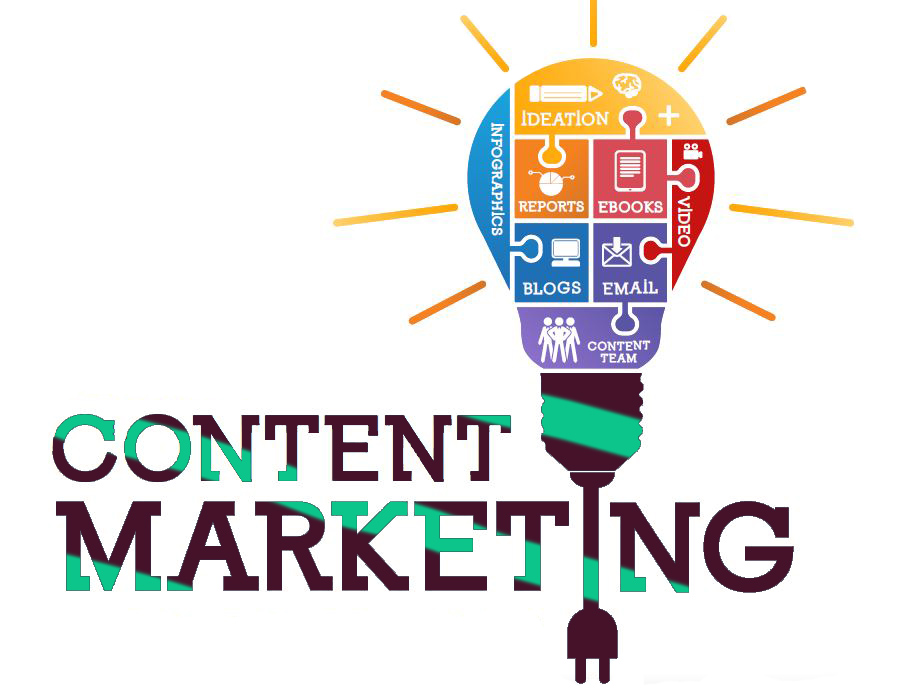
Blog articles are useful, but content marketing includes much more than blog posts.
Depending on the audience and objective, businesses can use:
- Educational articles
- Videos
- Podcasts
- Email newsletters
- Research reports
- Guides
- Checklists
- Templates
- Webinars
- Case studies
- Tutorials
- Product documentation
- Comparison pages
- Social media content
- Interactive resources
The format should follow the information problem.
A complicated software workflow might be easier to demonstrate visually. A technical comparison may be easier to evaluate in written form. A short factual question may only need a concise explanation.
The principle is simple:
Choose the format based on the information need, not the publishing habit.
Four Decisions That Strengthen Content Marketing Strategies
1. Define the Audience First
Content becomes easier to create when the intended reader is clear.
Consider:
- What problem are they trying to solve?
- How much do they already know?
- What questions are they likely to ask?
- What objections might they have?
- What information would help them make a decision?
A page written for beginners should not assume the same knowledge as a page written for experienced professionals.
2. Connect Content to a Business Objective
Content should have a reason for existing.
That reason could be:
- Building awareness
- Educating potential customers
- Generating qualified leads
- Supporting sales
- Explaining a service
- Helping customers
-Strengthening brand authority
Not every page needs to generate an immediate enquiry.
An educational article may introduce a problem. A comparison page may help a prospect evaluate options. A tutorial may help an existing customer.
The objective determines how the content should be structured and measured.
3. Match Content to Search Intent
Different searches require different answers.
Someone searching “what is content marketing” needs an explanation.
Someone searching “content marketing strategies” needs practical guidance.
Someone searching “content marketing agency” may be evaluating service providers.
Treating all three queries as the same content opportunity can produce pages that fail to satisfy the reader.
4. Decide How Success Will Be Measured
Traffic is only one possible indicator.
An educational article might be evaluated through relevant organic visits and engagement.
A lead-generation page might be evaluated through qualified enquiries.
A customer tutorial might be evaluated through its usefulness within the customer journey.
The right metric depends on the job the page is designed to perform.
Information Gain Is More Valuable Than Content Volume
One of the most important principles for modern content creation is information gain.
Publishing another article about a subject does not automatically make the web more useful.
A page becomes more valuable when it gives readers something they cannot easily obtain from a generic summary.
That might be:
- A decision framework
- A meaningful comparison
- A technical interpretation
- A practical workflow
- An explanation of a common misconception
- A documented real-world example
- A discussion of trade-offs
- A synthesis of authoritative information
Google’s people-first content guidance encourages creators to consider whether their content provides original information, research, analysis, or substantial additional value.
Google’s guidance on creating helpful, reliable, people-first content
This does not mean inventing original statistics or pretending to have personally tested something.
If first-hand experience is unavailable, the better approach is to use verified evidence and clearly distinguish fact from analysis.
For example:
Fact: Google provides guidance about creating helpful, reliable, people-first content.
Analysis: Therefore, a content strategy should prioritize satisfying the reader’s information need rather than producing pages solely for search-engine traffic.
Keeping those categories separate makes an article more transparent.
A Content Decision Framework
Before publishing an article, ask five questions:
| Question | What it establishes |
|---|---|
| Who is this for? | The intended audience |
| What problem does it solve? | The reader’s need |
| Why does the page exist? | Its business and informational purpose |
| What does it add? | Its information gain |
| What should happen next? | The appropriate reader action |
This framework prevents a common mistake: creating pages simply because a keyword exists.
A keyword can identify demand. It cannot, by itself, determine whether the finished article is useful.
Where Paid Advertising Fits
Content marketing does not replace paid advertising.
The two can support each other.
An advertisement may introduce a service to a relevant audience. The landing page can then provide the information needed to understand that service.
Similarly, a detailed guide may attract organic traffic while paid promotion gives it additional distribution.
The distinction is important:
Distribution gets content in front of people. Content determines whether there is something worthwhile for them to consume.
Paid advertising cannot turn irrelevant information into useful information.
Common Content Marketing Mistakes
Creating Content Only Because a Keyword Has Search Volume
Search demand can help identify topics, but it does not tell you everything the searcher expects.
Writing for Everyone
Content intended for everyone often becomes too general.
A clearly defined audience gives you a better basis for deciding what to explain and how deeply to explain it.
Treating Publishing Frequency as the Main Goal
More content does not automatically mean more value.
The goal should be useful content rather than content volume for its own sake.
Using Unsupported Claims
Statistics, rankings, market figures, research findings, technical specifications, and other specific factual statements should be verified before publication.
If a claim cannot be verified, leaving it out is better than guessing.
Presenting Hypothetical Examples as Real Experiences
An illustrative scenario can make an article easier to understand, but it should be identified as an example.
A hypothetical customer story should never be presented as a genuine case study.
Measuring Every Page the Same Way
An educational article and a conversion-focused service page have different purposes. They should not automatically be evaluated using identical metrics.
A Practical Content Marketing Process
A sustainable content program can follow this process.
Step 1: Identify the Audience
Define the people the content is intended to help.
Step 2: Research Their Problems
Identify genuine questions, obstacles, decisions, and information gaps.
Step 3: Understand Search Intent
Determine whether the reader wants an explanation, comparison, solution, tutorial, evaluation, or another type of answer.
Step 4: Choose the Format
Select the format that communicates the information most effectively.
Step 5: Establish the Purpose
Connect the content to a meaningful business or customer objective.
Step 6: Verify Important Claims
Check statistics, research, dates, technical information, and other specific factual statements against credible sources.
Step 7: Add Information Gain
Include useful analysis, comparisons, frameworks, trade-offs, or documented evidence rather than simply rewriting existing content.
Step 8: Optimize Naturally
Use descriptive titles, headings, relevant terminology, internal links, and appropriate external references.
Step 9: Distribute the Content
Choose channels based on where the intended audience can realistically discover the material.
Step 10: Measure the Intended Outcome
Use metrics that correspond to the page’s purpose.
Step 11: Improve the Asset
Update outdated information, strengthen weak sections, remove unnecessary material, and address unanswered questions.
How Content Supports Different Digital Marketing Channels
The connection between content and digital marketing becomes clearer when individual channels are considered.
SEO
Content provides pages that can answer relevant search queries.
Social Media
Content gives businesses ideas, insights, visuals, educational information, and discussions to share.
Email Marketing
Content gives subscribers a reason to open and engage with emails.
Paid Advertising
Content gives advertising traffic a useful destination after the click.
Lead Generation
Educational resources can answer questions and reduce uncertainty before someone submits an enquiry.
Sales Enablement
Guides, comparisons, documentation, and other resources can support sales conversations.
Customer Education
Tutorials and knowledge resources can help customers understand products and services.
Content does not replace these channels. It gives them useful material to communicate.
The Real Relationship Between Digital Marketing and Content Marketing
Saying that digital marketing is all about content marketing should not be interpreted as a literal definition.
Digital marketing is broader. SEO, paid media, analytics, websites, conversion optimization, email systems, and distribution all matter.
But the statement captures an important strategic reality:
Many digital marketing channels depend on useful content to communicate effectively.
Search needs answers.
Social media needs ideas.
Email needs information.
Landing pages need explanations.
Sales teams need useful resources.
Customers need education.
This is why content can act as the connective layer between different digital marketing activities.
The strongest content marketing strategies are not necessarily the ones that publish the most articles. They are the ones that consistently understand an audience, identify meaningful information needs, verify important claims, add genuine information gain, distribute content through appropriate channels, and measure whether the content accomplishes its intended purpose.
Content becomes particularly valuable when it gives people something they can actually use: a clearer explanation, a practical process, a better comparison, or trustworthy information that reduces uncertainty.
That is where content stops being simply something a business publishes and becomes a meaningful part of its digital marketing strategy.