
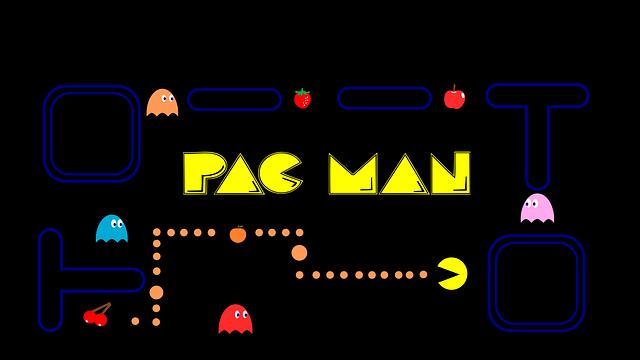
The Pacman 30th Anniversary Game remains an important milestone in the history of classic arcade gaming. Pac-Man was introduced in 1980 and became a major success in Japan and the United States, establishing a character and gameplay formula that would remain recognizable for decades. Official PAC-MAN history.
More than four decades later, the character is still one of the most recognizable names in video games. The appeal comes from a simple combination: easy-to-understand controls, maze-based gameplay, recognizable characters, increasing difficulty, and the constant pressure of avoiding ghosts while collecting items.
The 30th-anniversary period gave fans another opportunity to revisit that classic formula while experiencing Pac-Man through newer digital formats.
What Is the Pacman 30th Anniversary Game?
The Pacman 30th Anniversary Game refers to the anniversary-era celebration and releases associated with Pac-Man’s 30-year milestone.
The original game was built around maze navigation. Players control Pac-Man through a maze while collecting items and avoiding ghosts. Power Pellets provide an important change in the balance of the game, allowing Pac-Man to temporarily turn the tables on the ghosts.
The basic concept is remarkably simple, but the challenge increases as players become more focused on movement, timing, route planning, and score.
That simplicity is one of the biggest reasons Pac-Man has remained accessible to both new players and longtime arcade fans.
When Was Pac-Man Released?
Pac-Man was introduced in 1980. The official PAC-MAN history records the first focus test on May 22, 1980, the Japanese public release in July, and the U.S. release in October of the same year.
The Smithsonian’s National Museum of American History also preserves a Bally Pac-Man arcade machine in its collection, documenting the game’s place in arcade history.
That timeline is important because the 30th anniversary was not simply a celebration of a game that had existed for a few years. It highlighted three decades of recognition for a character that had already moved far beyond the original arcade cabinet.
Why Pac-Man Became So Popular
Pac-Man did not depend on complicated controls or a large set of instructions.
The player could understand the basic objective quickly: move through the maze, collect items, avoid ghosts, and use Power Pellets strategically.
The game’s simple rules and recognizable character design helped it reach a broad audience.
Another important factor was the game’s identity.
Pac-Man was not just a generic shape controlled around a screen. The character, ghosts, maze, sound effects, visual style, and recognizable gameplay created a complete identity that could be remembered easily.
That helped Pac-Man become a cultural symbol as well as an arcade game.
Pacman Maze Gameplay
The maze is at the heart of Pac-Man.
Players have to navigate through connected paths while making decisions about direction and timing. The challenge is not simply moving forward. Players must think about where the ghosts are, where the remaining items are located, and which route gives them the best chance of continuing.
This creates a simple but effective gameplay loop:
Move → collect → avoid → use Power Pellets → survive → score higher
The rules are easy to understand, but the pressure increases as the player progresses.
That combination makes Pac-Man suitable for short sessions while also giving experienced players a reason to improve their performance.
How Power Pellets Change the Game
Power Pellets are one of the most recognizable parts of Pac-Man.
Under normal circumstances, the ghosts are threats that the player needs to avoid. Power Pellets temporarily reverse that relationship, giving Pac-Man an opportunity to pursue the ghosts.
This creates an important strategic decision.
A player can simply focus on clearing the maze, or they can try to use Power Pellets at the right moment to increase their score and escape dangerous situations.
The power-up system is one reason the original game feels more strategic than its extremely simple controls might suggest.
The Role of the Ghosts
The ghosts are essential to the tension of Pac-Man.
Without them, the maze would mostly become a collection exercise. Their presence turns movement into a survival challenge.
Players need to watch their position and think ahead rather than reacting only after a ghost gets close.
This is a major part of what makes Pac-Man easy to learn but difficult to master.
The player does not need complicated controls. Instead, skill develops through better movement, awareness, timing, and route selection.
Pacman 30th Anniversary Game Review
The biggest strength of the anniversary concept is its connection to the original Pac-Man experience.
For longtime fans, returning to a familiar maze-based structure can recreate the appeal of classic arcade gaming. For newer players, the straightforward gameplay provides an easy entry point into one of the best-known arcade franchises.
The original Pac-Man formula also has an advantage that many modern games do not: a player can understand the objective almost immediately.
You do not need a long tutorial before starting.
You simply begin moving, learn the maze, react to the ghosts, and try to achieve a better result.
That creates an experience that works particularly well for quick sessions.
Pacman for New Players
Someone who has never played Pac-Man may initially assume that the game is too simple.
That impression can change quickly.
The controls are simple, but the difficulty comes from managing several things at once. You have to monitor the maze, anticipate ghost movement, decide when to take risks, and use Power Pellets effectively.
The game therefore teaches its mechanics through play rather than through long explanations.
That makes it approachable for beginners while retaining enough challenge for people who want to improve.
Pacman for Classic Arcade Fans
For arcade fans, Pac-Man has a different appeal.
It represents an era in which games often needed to be immediately understandable because arcade players had limited time and wanted to start playing quickly.
Pac-Man fits that philosophy extremely well.
The anniversary period also gave fans another reason to revisit the character through games, digital experiences, merchandise, and other Pac-Man-related products.
Pac-Man Beyond the Original Arcade
Pac-Man did not remain limited to one arcade machine.
The official franchise history documents Pac-Man’s development across multiple years and platforms, including console and handheld releases. PAC-MAN history and franchise timeline.
The core maze concept remained recognizable even when later games introduced different mechanics, environments, or presentation styles.
This flexibility helped keep Pac-Man relevant as gaming technology changed.
Why the 30th Anniversary Still Matters
The 30th anniversary matters because it represents a transition between generations.
A player who experienced Pac-Man in an arcade could later encounter the character on a computer, console, handheld device, or another digital platform.
The anniversary period gave fans another reason to revisit the franchise and discover the character through newer formats.
That helped demonstrate how a classic arcade concept could remain recognizable across different generations of gaming.
Pacman and Gaming Culture
Pac-Man became larger than the individual game.
It became part of broader gaming culture, with merchandise, media appearances, new games, and anniversary celebrations helping keep the character relevant.
The character’s visual design also made it highly recognizable outside gaming.
This is an important distinction. Many arcade titles became popular for a period and then disappeared from mainstream awareness. Pac-Man developed an identity that could continue through merchandise, media appearances, new games, and anniversary celebrations.
That longevity is one of the strongest reasons the franchise remains relevant.
Is Pacman 30th Anniversary Worth Revisiting?
For players who enjoy classic arcade games, the answer is yes.
The strongest reason is not advanced graphics or complex mechanics. It is the gameplay itself.
Pac-Man provides a simple objective and immediately understandable controls while still creating pressure through the maze and ghost system.
Players looking for modern cinematic graphics or elaborate storytelling may find the experience limited. But that is not really what Pac-Man is designed to provide.
Its strength is quick, focused arcade gameplay.
What Makes Pacman Different From Modern Games?
Modern games often depend on large worlds, character progression, detailed narratives, online systems, or complicated control schemes.
Pac-Man takes almost the opposite approach.
The game focuses on:
● Simple controls
● Maze navigation
● Score chasing
● Fast decision-making
● Increasing challenge
● Repeatable gameplay
That difference is part of its appeal.
A player can finish a short session and immediately want to try again to improve the score.
Pacman 30th Anniversary and Nostalgia
Anniversary editions and celebrations often work because they connect older players with games they remember while allowing newer audiences to discover them.
Pac-Man is particularly suited to nostalgia because its visual identity has remained recognizable for decades.
The 30th-anniversary period gave fans another reason to revisit the franchise and experience Pac-Man through newer digital formats.
For longtime arcade players, that familiarity can be just as important as the game itself.
Final Thoughts
The Pacman 30th Anniversary Game represents more than a milestone for one arcade title.
Pac-Man was introduced in 1980 and became a major success in Japan and the United States, eventually developing into one of the most recognizable video game franchises in history. Official PAC-MAN history.
Its enduring strength comes from the fundamentals: maze navigation, simple controls, ghost avoidance, Power Pellets, score chasing, and challenging gameplay.
The anniversary celebration gave fans an opportunity to revisit those ideas and explore the wider Pac-Man legacy.
Even after decades of technological change, the basic formula still works because it is easy to understand but difficult to master.
That is ultimately why Pac-Man continues to hold a special place in gaming history.